Category: Legislation

Plan A doesn’t fit. So what happens next?

Plan A doesn’t fit. So what happens next?

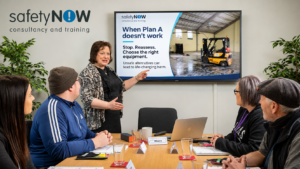
On a construction project, a scissor lift could not access the work area. A forklift tipping bucket was used instead. A worker fell and suffered life-changing injuries.

The principal contractor was fined £90,000.

When the original plan doesn’t work, the answer isn’t to improvise an unsafe alternative.

Stop. Reassess. Choose suitable equipment. Confirm people are competent and supervised.

The ability to recognise when a job needs to change is part of doing it safely.

Get in touch with SafetyNow to find out how our practical, professional training can help your teams recognise risks, challenge unsafe practices and make safer decisions when plans change.


Official HSE source: Open prosecution report
The biggest danger on a job isn’t always the one you can see

The biggest danger on a job isn’t always the one you can see.

A roofer suffered life-changing injuries after falling through an unprotected loft hatch. His employer was fined £20,000.

HSE found shortcomings in planning and competent supervision.

An opening in a floor or roof space is a hazard whether it’s obvious at first glance or not.
This is why site-specific assessments matter: identify the danger, prevent access and make sure everyone understands the controls.

Before your team starts, what hidden hazards have been checked?

Hidden hazards can have life-changing consequences.

At SafetyNow, we help businesses strengthen hazard awareness, risk assessment and safe working practices through practical, professional training.

Contact SafetyNow today to help your team spot the risks before they cause harm.


New Occupational Health & Safety Standard – ISO 45001

“Every 15 seconds, a worker dies from a work-related accident or disease, and 153 people experience a work-related injury. These represent an enormous burden for organisations and society as a whole, costing over 2.3 million deaths a year, not to mention the more than 300 million non-fatal accidents*.”

Continue reading