
‘11 Cubic Metres’ And Other Health & Safety Anomalies!
Imagine you’re busy at work one day when Harold in accounts suddenly gasps and keels over. Paramedics arrive, but poor Harold is flat on his back with a peaceful expression on his face.
Of course, you’re a responsible employer, so you report the fatality to the HSE. Later that day you’re browsing the RIDDOR Regulations, which cover the reporting of injuries, diseases and dangerous occurrence regulations. You’re surprised to discover one scenario where you don’t legally have to report a fatality…
If you’re self-employed and you die at work, you don’t have to report it.
You make a mental note to pass this information on to all your self-employed friends! If they croak at work, they’re off the hook…
This of course is an anomaly in the legislation. There are a few other Health & Safety anomalies to be aware of…
Eleven Cubic Metres
I recently saw the following question on Facebook:
“Hi all, we have office space with 35 desks for staff. The number of people in the office peaks at 35 at certain times, but not constantly throughout the day. According to the 11 cubic meter volume under the welfare regs, the maximum for that space is 27. Thoughts please!”
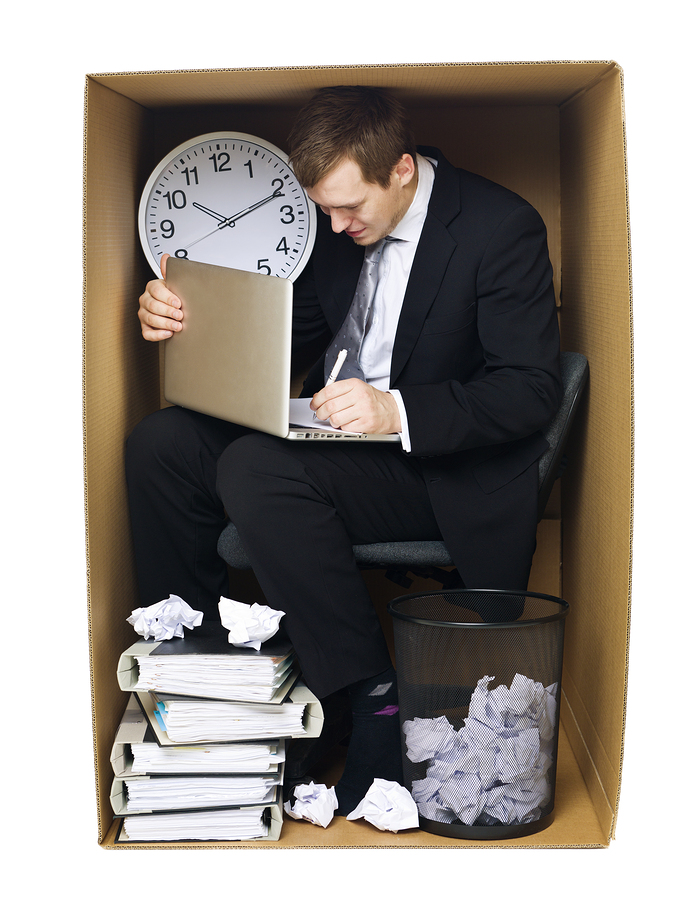
Eleven cubic metres is the oddly specific amount of space the HSE believes is required for one individual working in an office environment. Eleven cubic metres may sound scientific, but only because it’s a specific number! It’s also a prime number, so mathematically is difficult to use because you can’t divide anything into it.
Besides, what does 11m3 actually look like? Unless you’ve stood on a chair in the middle of your office space swinging your arms about, how can you possibly know? Plus, how long are your arms, really? Maybe you have gibbon-length arms??
Also, how high are your ceilings? How much space do you need in front of you, and to the side? Can the eleven cubic metres be in any Tetris shape you like?? Do you need Tetris experience to calculate it?? Questions, questions…
Guidance and Regulation
So let me first say that eleven cubic metres is guidance rather than legislation…
What’s the difference?
For legislation, we have acts of parliament and regulations that sit underneath the Health and Safety at Work etc Act. Those regulations can have what we call ‘full legal status’. You might then encounter an Approved Code of Practice (ACoP), which has semi-legal status.
Under this, you then have guidance on what you need to do to meet your legal obligations. Guidance has no legal status; you’re not required to follow it. Although usually if you’ve met the guidance, you’ve generally met your legal obligations too!
The eleven cubic meters for regular working is one of the anomalies of Health & Safety guidance. It’s like they’ve provided a figure to try and be helpful, but actually confused things in the process.
So back to the post I saw in that Facebook group…
The poster says they’ve got 35 desks for staff, but not all 35 are in constant use throughout the day. For this, they would generally have to do a risk assessment.
The legislation says that every room where a person works shall have “sufficient floor area, height and unoccupied space for the purposes of health, safety and welfare. There should be sufficient compliance with this regulation in a workplace which is not a new workplace, a modification, an extension and which immediately before this regulation came into force and respectively was subject to the provisions of the Factories Act 1961.”
Riveting, I know!
Let me summarise by saying this is all guidance. You just need a reasonable amount of space to do your work comfortably and safely.
Office Temperature Disagreements…
Under the same set of regulations you’ll find another anomaly that always causes much discussion in summer: temperature.
There’s no legal requirement for temperature in a workplace. The following guidance has no legal status.
If you’re doing manual work the guidance for minimum temperature is 13° Celcius. If you’re sitting at a desk all day long, the guidance for minimum temperature is 16° Celcius. Which is still pretty cold! So as a responsible employer, you want to put things in place for cold temperatures. But there is no legal requirement to do so.
So next time somebody storms out of the office saying “It’s too cold, I’ve got to go home,” you can say “No it isn’t, because Moira says it’s only guidance!”
After all, if you’re working outdoors or in a warehouse, how often does it get to 13° in the UK? So put on a jumper, or put on the right warm clothing to be able to work.
Upper temperature is more interesting because there is no specific guidance. The guidance says you just have to reduce the temperature to a ‘reasonable level’, so it’s very much open to interpretation.
For example, my stepdaughter has been visiting us recently. Even in the beautiful summer weather we’ve been having, she’s been wearing jeans, boots, a long-sleeved t-shirt; plus a sweatshirt over the top. When we go out she wears a coat, even in 24° heat!
Why? Because most of the year she works in Kuwait. So 24° is pretty cold for her. So again it comes down to interpretation rather than anything set in stone.
Manual Handling Regs
Everyone seems to have an opinion on how much you can safely lift at work. Some people will tell you, with absolute certainty, that if you’re a man you can lift 25 kilos, but if you’re a woman you can only lift 15 kilos.
Which isn’t true, because everybody is different. A 6-foot man who goes to the gym every day (and requires 11m3 of space) can probably lift more than somebody who is reaching retirement age.
The guidance actually says you can lift whatever you feel comfortable lifting. What you’re comfortable lifting could also vary day by day. Perhaps you injured yourself playing football yesterday, or picking up the kids. All these things affect what you can lift.
Interestingly enough I did some work recently for Royal Mail, where they put a limit of 11kg on what people can lift. (What is it about the number 11??) When I said they could put a maximum of 11 kilos on their mail sacks, they all fell about laughing! (Please don’t make me explain that one…)
But if you can’t lift 11 kilos, don’t lift it! Don’t put yourself at risk. So again, it’s guidance. Let common sense prevail.
Do you have any questions about H&S guidance? Let me know and I will attempt to answer them!
Moira
P.S. To update your training you can browse all our courses at www.safety-now.co.uk.
Tags: